AI-Powered Immersive Storytelling: Solustiq's Architectural VR & WebGL
As we look to 2026, the boundaries of the digital world are expanding more than ever before. In particular, AI-powered immersive storytelling is radically transforming web experiences. This innovative approach moves users from passive spectators to active participants, fundamentally changing how brands interact with consumers. At Solustiq, we are proud to be at the forefront of this transformation with our data-driven and AI-centric solutions. With strong references such as Hagiasophia.com and Galatatower.com, we demonstrate how architecture integrates with digital art.
Beyond Traditional Websites: What is AI-Powered Immersive Storytelling?
While traditional websites provide information, AI-powered immersive storytelling aims to draw users into an event or experience. This is achieved not only with text and visuals, but also with technologies such as interactive elements, 3D models, virtual reality (VR), and augmented reality (AR). Importantly, artificial intelligence plays a critical role in personalizing these experiences, dynamically adapting content, and offering a custom journey to the user. This innovative approach significantly enhances optimizing visitor experience on AI-powered websites.
AI's Contribution to Personalized Storytelling
Artificial intelligence algorithms analyze user behaviors, preferences, and interests to create unique narrative flows. Consequently, each visitor's interaction with the site becomes an experience specifically tailored to their current mood and needs. For example, on a site promoting an architectural project, AI can highlight different details based on a user's previously expressed interest in certain architectural styles. Learn more about embedded psychographic profiling on websites for deeper user insights.
The Power of Virtual Reality and Augmented Reality in Immersion
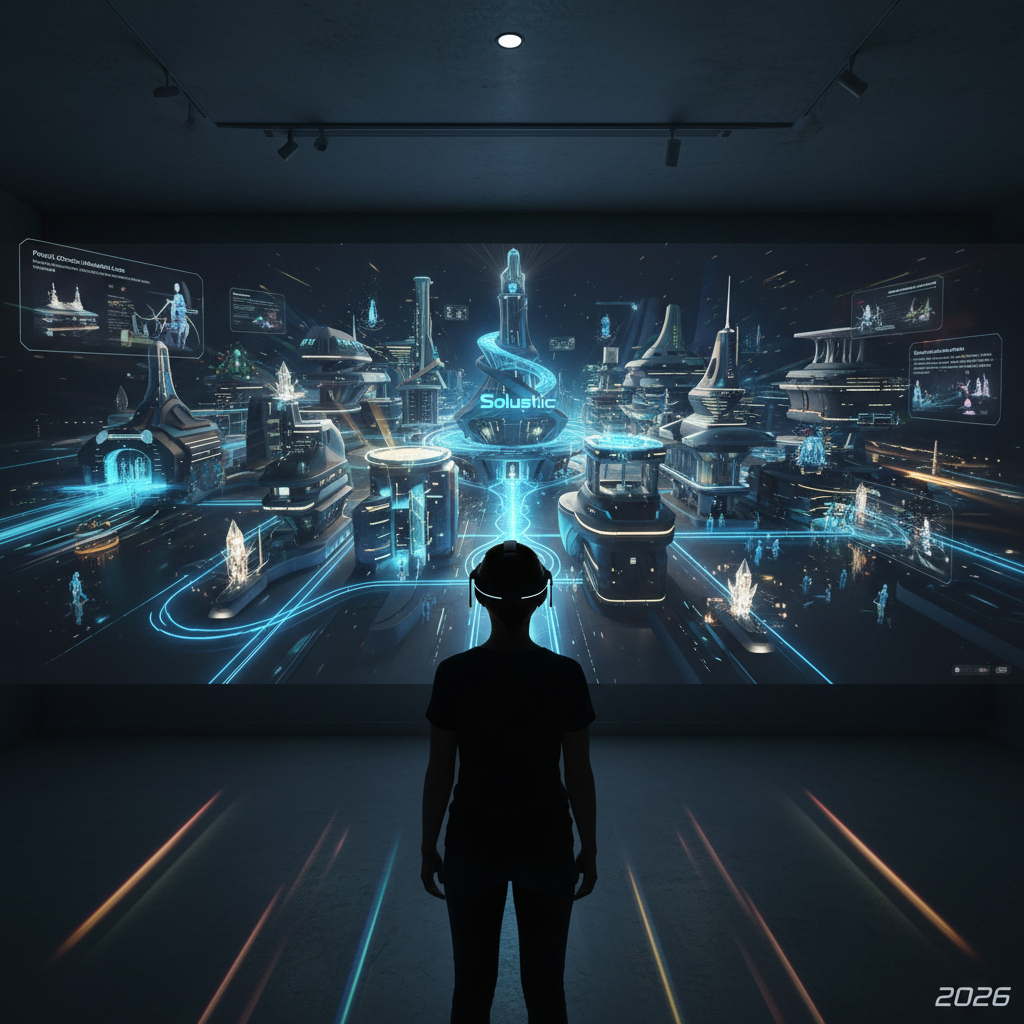
VR and AR are the cornerstones of immersion. With VR, users can wander inside an architectural masterpiece, examine materials up close, or experience different lighting scenarios as if they were physically present. Conversely, AR integrates these digital models into real-world environments, offering the ability to show, for instance, what a building to be constructed on a particular plot of land would look like. This perfectly aligns with our vision for immersive storytelling and virtual replicas in AI-powered websites.
Solustiq's WebGL and Virtual Reality Integration in Architectural Projects
At Solustiq, we leverage the full potential of AI-powered immersive storytelling in our projects such as Hagiasophia.com and Galatatower.com. WebGL, specifically, is an indispensable tool for bringing these architectural marvels to life in 3D within web browsers. Users can explore every detail of these iconic structures from various angles, almost as if they are walking inside them. This technology is vital for AI-powered SEO and interactive real-time 3D modeling.
Hagiasophia.com: A Journey Through History with AI Storytelling
For our Hagiasophia.com project, WebGL enables us to present the complex interiors and exteriors of Hagia Sophia in exquisite detail. Visitors can experience the different historical periods of Hagia Sophia with interactive narratives created by AI, using virtual reality headsets. Thus, this becomes not just a website, but also a digital twin of a historical monument. This demonstrates how predictive modeling of user experience guides our future-forward design.
Galatatower.com: A View from the Heart of Istanbul
Galatatower.com, built around the history and architecture of the Galata Tower, is a platform providing visitors a panoramic view of Istanbul while they explore the tower. Moreover, AI-powered guides present information about the tower according to the user's interests, while a 3D model created with WebGL allows an interactive view of details on each floor. Users can enjoy a 360-degree view of Istanbul from the top, and even compare it with the 2026 city skyline.
The Future of AI-Powered Immersive Storytelling in 2026 and Beyond
The future of AI-powered immersive storytelling in digital marketing and web design looks very bright indeed. In 2026 and beyond, we anticipate this technology to further develop and become more accessible. Faster internet infrastructures, advanced AI models, and more affordable VR/AR hardware will undoubtedly pave the way for widespread adoption of such experiences. We also see exciting possibilities with integrated Brain-Computer Interfaces (BCI) on websites for truly thought-controlled experiences.
The Increasing Role of Gamification in Immersive Experiences
Gamification elements will increasingly be used in immersive storytelling to boost user engagement. Users will be able to delve deeper into the story by completing tasks, discovering hidden secrets, or earning rewards in virtual worlds. This offers significant opportunities, especially for educational and e-commerce websites. Tools like WebGL are crucial for rendering these interactive 3D environments directly in the browser.
Metaverse Integration and Web 3.0: New Dimensions for AI Storytelling
With the development of Web3.0 and metaverse concepts, AI-powered immersive storytelling will gain new dimensions in decentralized virtual worlds. Users will be able to participate in these immersive experiences with their digital avatars, create content, and establish unique interactions. At Solustiq, we continuously invest in R&D to adapt to these next-generation web technologies. For more insights into the future of digital interactions, you can explore resources from the W3C WebGL Community Group.
The Importance of AI-Powered Immersive Storytelling for SEO and User Experience
Beyond aesthetics, AI-powered immersive storytelling offers significant advantages for search engine optimization (SEO). As users spend more time on a site, engagement rates increase, and they connect more deeply with the content. Consequently, search engines deem these sites more valuable, contributing to long-term SEO sustainability for AI-powered websites.
Achieving Longer Session Durations and Lower Bounce Rates
Immersive experiences significantly increase the time users spend on a website. Because users become part of the story, they consume the content for longer periods. This inherently reduces bounce rates, a critical metric for search engine rankings. Our adaptive algorithms help in driving these positive engagement metrics through adaptive real-time analytics.
Boosting Social Sharing and Brand Awareness through Immersive Stories
Unique and AI-powered immersive storytelling experiences produce content with high potential for social media sharing. This effectively increases organic reach, boosts brand awareness, and expands the potential customer base. Ultimately, a viral AI-powered virtual tour can significantly increase a brand's visibility. This is a key component of our strategy for AI-powered SEO for hyper-dynamic image and video generation.
Build the Digital Experiences of the Future with Solustiq
At Solustiq, in 2026 and beyond, we offer AI-powered immersive storytelling solutions to help businesses stand out in the digital world. With our data-driven approaches and artificial intelligence expertise, we can create not just a website, but an unforgettable experience for your brand. Our projects like Hagiasophia.com and Galatatower.com are a testament to our competence and vision in this field. Contact us to take your place in the digital world of the future!
Innovation in Artificial Intelligence and Web Design
With continuously developing artificial intelligence technologies, web design processes are also becoming smarter and more efficient. Solustiq closely follows these innovations to provide its customers with state-of-the-art and future-ready web solutions. In each of our projects, we leverage the power of AI to develop designs that are not only aesthetic but also functional and user-centric.
The Power of Data-Driven Decisions for Immersive Storytelling
Successful AI-powered immersive storytelling begins with robust data analysis. Understanding user data reveals who the target audience is, what interests them, and how they interact. At Solustiq, we adopt a data-driven approach in every project, feeding our AI algorithms with this data to create truly impactful experiences.